
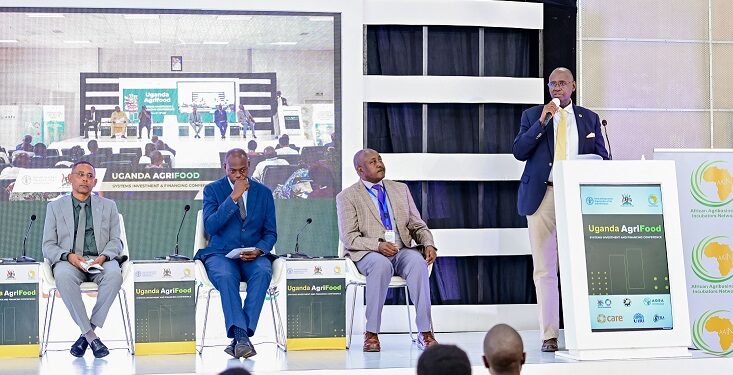
KAMPALA – The Food and Agriculture Organisation of the United Nations (FAO) in collaboration with the Ministry of Agriculture, Animal Industry and Fisheries (MAAIF), the Office of the Prime Minister, and other partners, has hosted the Uganda Agrifood Systems Investment and Financing Summit. The two-day summit is taking place at the Uganda Industrial Research Institute, Namanve, under the theme “Catalyzing Innovative Financing and Investments in Uganda’s Agrifood Systems for Accelerated Socio-Economic Transformation and Sustainable Development.”
The summit convened policymakers, agribusiness leaders, financiers, researchers, and development partners to advance dialogue and commitments towards strengthening investments in Uganda’s agrifood systems. Uganda’s agrifood systems are at a critical juncture, with a rapidly growing population of approximately 45.9 million people. This growth presents both tremendous opportunities and pressing challenges in addressing food security.
The agriculture sector, which contributes 24% to Uganda’s GDP, 33% of exports, and employs over 70% of the population, remains a cornerstone of the nation’s economy. Despite its centrality to Uganda’s development, the sector faces significant obstacles that impede its full potential. Recent data from the 2024 State of Food Security and Nutrition report highlights that over 34% of Uganda’s population remains undernourished, with more than 12 million people facing food insecurity.
Mr. Yergalem Taages Beraki, FAO Representative in Uganda, emphasized the importance of the conference, given the recent budget cuts across the donor community. He highlighted the need for alternative and innovative financing mechanisms to accelerate the attainment of National Development Plan IV aspirations and the SDGs.
“The Government of Uganda is looking for alternative and innovative financing mechanisms to accelerate the attainment of National Development Plan IV aspirations and the SDGs. Significant gaps in financing and investment hinder the effective transformation of agrifood systems in Uganda. Funding gaps, particularly in the agriculture and trade sector, remain a critical obstacle to implementing food systems transformation actions.”
According to him, mobilizing domestic public and private resources, coupled with transformative investments in agrifood systems, will unlock significant economic, social, and environmental benefits.
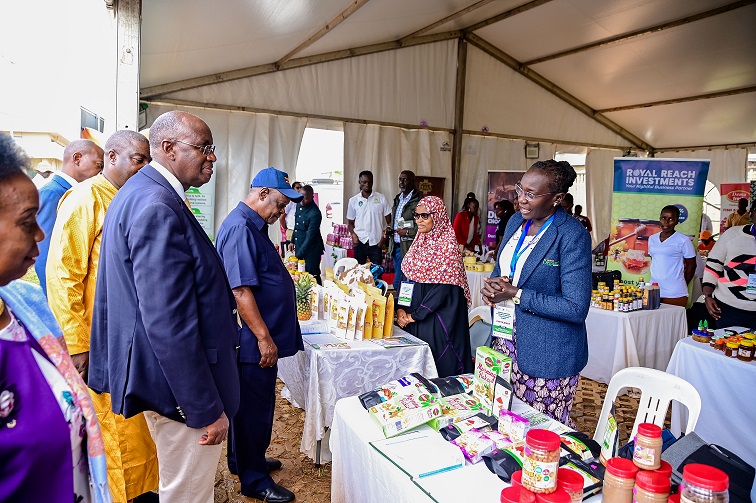
Mr. Edward Walugembe, the Commissioner for Strategic Coordination and Implementation in the Office of the Prime Minister, emphasized the importance of collaboration, coordination, and implementation in achieving national development goals.
He said, “We need to work together to achieve our national development goals. Coordination, connectedness, continuity, and communication are essential in food systems transformation. Our National Development Plan (NDP) is fit for purpose, and now we need to focus on implementation. Financing, coordination, and governance for food systems transformation are critical for our success.”
Dr. Ivan Lule, from the National Planning Authority, highlighted the critical lessons learned from NDP3 and the importance of implementing NDP4, which prioritizes agrifood system transformation as a key driver for economic growth, poverty reduction, and sustainable development.
He said, “We recall that the food systems agenda started during the launch of the Third National Development Plan (NDP3). However, we struggled to achieve results due to global disruptions such as Covid-19 and the Russia-Ukraine war. We learned critical lessons and hope to do better in NDP4. NDP4 is aligned with the 10-fold growth strategy, aiming to grow our GDP from $50 billion to $500 billion by 2040. Food systems transformation is critical to achieving this goal.”
Mr. David Wozemba, AGRA Country Director, Uganda, emphasized the importance of collective effort in achieving food systems transformation.
“The transformation agenda is not a one-person show; it’s a collective effort that requires all of us to bring in whatever investment is required to change the ecosystem. With the planning process now complete, it’s essential to focus our efforts on ensuring successful implementation. The government has acknowledged its role in leading the implementation process, and coordination is critical.”
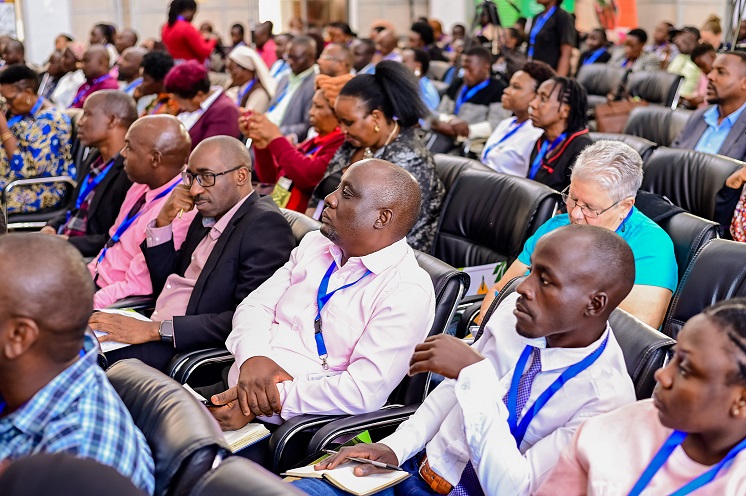
Dr. Bright Rwamirama, Minister of State for Animal Industry, highlighted the importance of the agrifood sector to Uganda’s economy and the need for targeted strategic investment to transform agriculture into a truly transformative driver of sustainable development.
“This conference comes at a critical moment in Uganda’s development agenda. Our agri-food system continues to anchor the national economy, contributing 24% of GDP, accounting for 33% of export earnings, and employing 70% of our population directly and indirectly. With our population surging to 46 million people, the demand for food, jobs, and sustainable income is rising rapidly.”
The Government of Uganda has taken bold steps to address the challenges facing the agrifood sector, including promoting value addition and rural industrial development, empowering households and communities to shift from subsistence to market-oriented production, and investing in agricultural research and innovation.
Dr. Rwamirama said, “We have invested significantly in enhancing agricultural research and innovation, strengthening pest and disease control, expanding water for production infrastructure, and regulating and supporting the fisheries subsector. We are also promoting aquaculture as a valuable source of income and nutrition.”